
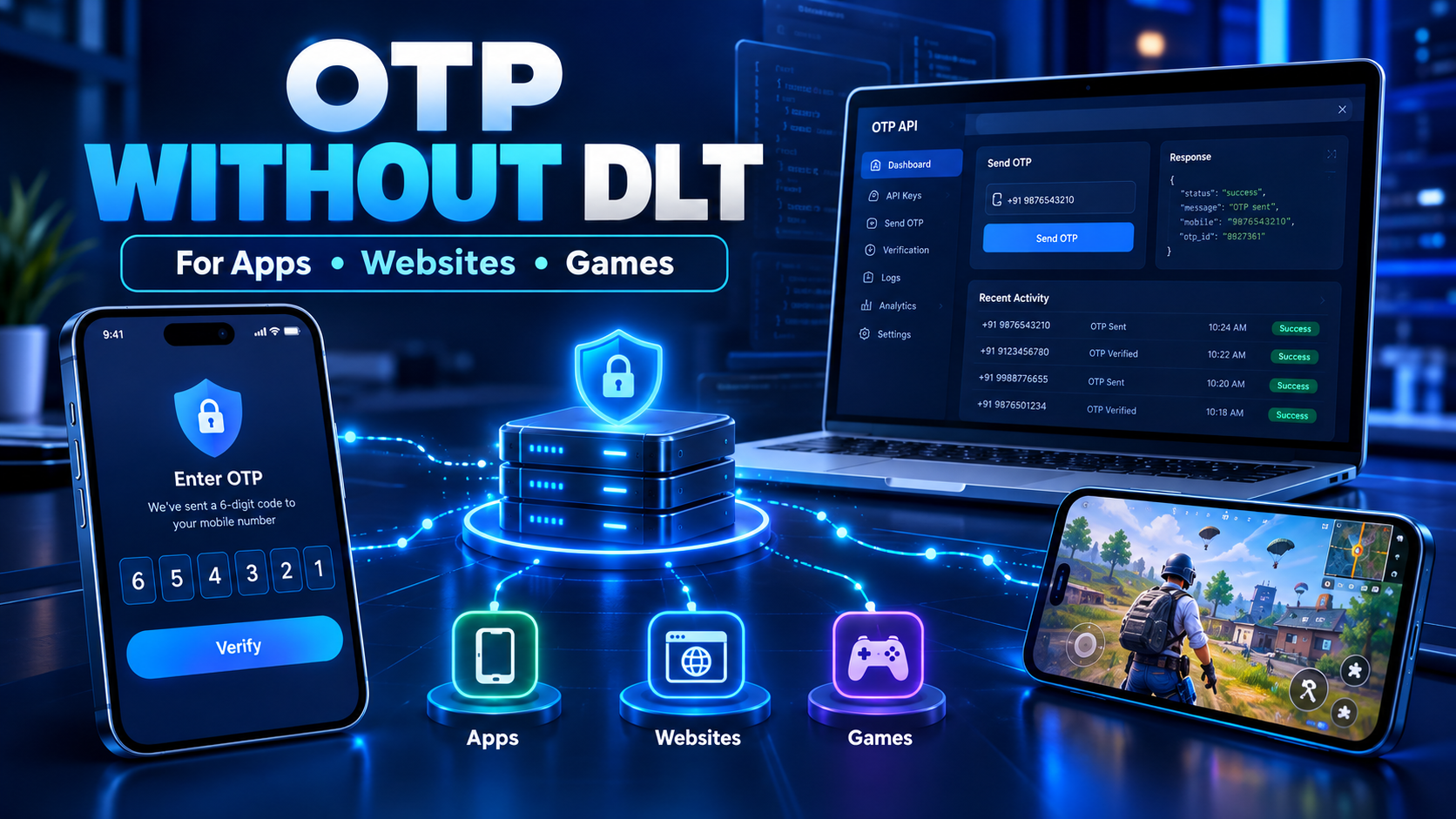
How to Send OTP Without DLT for Apps, Websites and Games
If you are developing an app, website or online game, OTP verification is one of the most common features you will need.
Whether it is user registration, login, password reset, mobile number verification or account security, OTP helps businesses verify that the user actually has access to the registered mobile number.
But for many developers, getting an OTP SMS system live can feel complicated. There are questions about DLT registration, sender IDs, templates, API integration, documentation and onboarding.
So, is there a simpler way to get started with OTP?
The answer depends on the type of messaging you are sending and the applicable telecom and regulatory requirements. However, modern OTP providers can make the technical setup and onboarding process much easier, allowing developers to connect an OTP API and start testing their verification flow quickly.
In this guide, we will explain how OTP works, how developers can integrate an OTP API, what people mean when they search for “OTP Without DLT”, and how to choose an OTP service for apps, websites and games.
What Is OTP?
OTP stands for One-Time Password.
It is a temporary verification code that is generally sent to a user's mobile number or another verified communication channel.
For example, when a user creates an account on your application, your system can request an OTP:
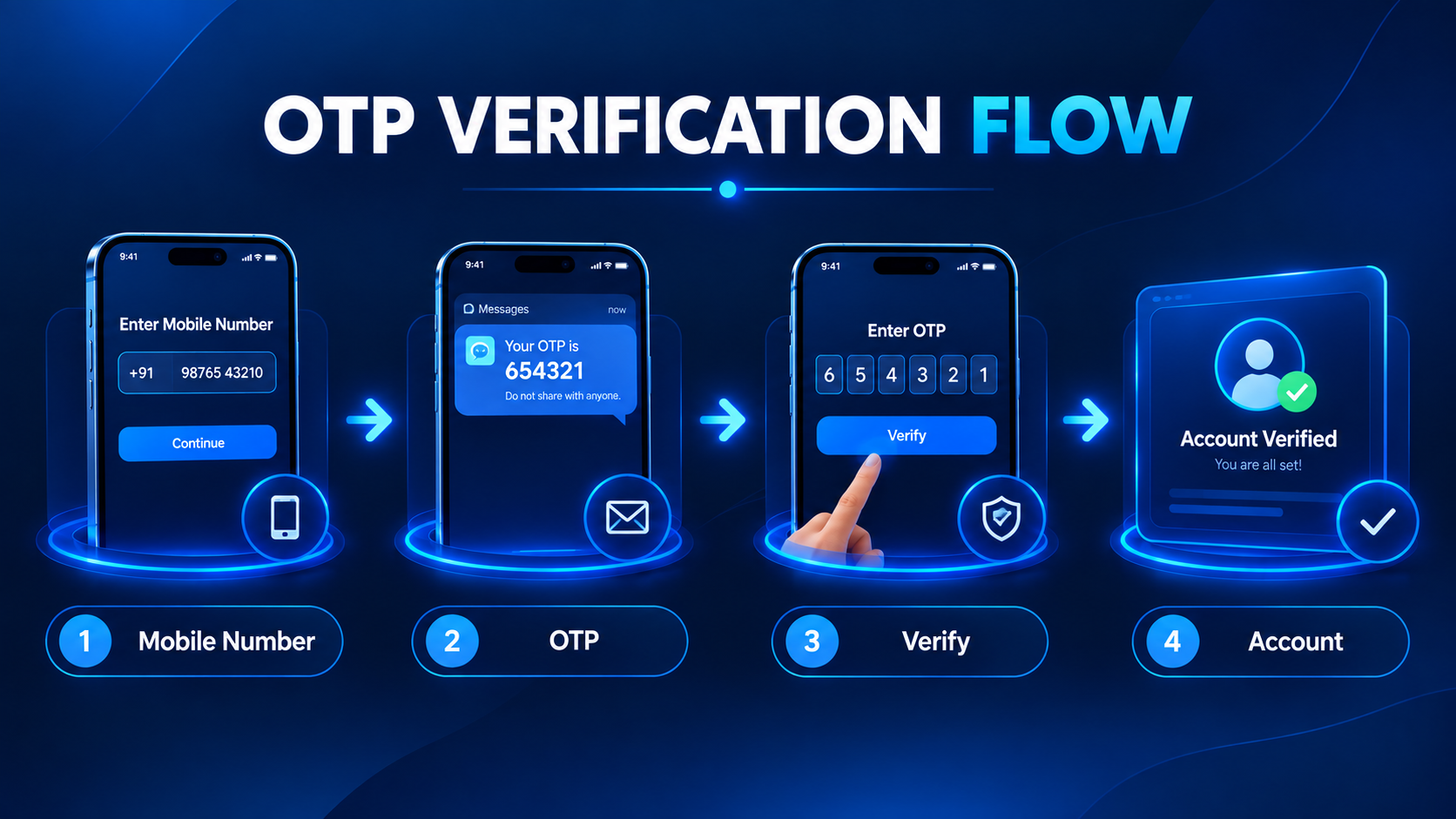
User enters mobile number → OTP is generated → OTP is delivered → User enters OTP → Number is verified
The OTP normally expires after a short period and should not be reused.
OTP verification is commonly used for:
- User registration
- Login verification
- Password reset
- Mobile number verification
- Transaction verification
- Account recovery
- New device verification
- Two-factor authentication
- User onboarding
For developers, the most important part is making this process fast and reliable.
What Does “OTP Without DLT” Actually Mean?
The keyword OTP Without DLT is commonly searched by developers and businesses looking for an OTP solution that does not require them to go through a complicated DLT-related setup themselves.
However, it is important to understand the difference between easy onboarding and bypassing telecom regulations.
DLT, or Distributed Ledger Technology, is used in India's telecom messaging ecosystem for regulating commercial communications. Requirements can vary depending on the type of SMS, sender, template and telecom route being used.
So, an OTP provider should not simply promise to “bypass” regulatory requirements.
Instead, businesses should look for an OTP platform that provides:
- Fast onboarding
- Developer-friendly APIs
- Clear documentation
- Easy integration
- OTP generation
- OTP delivery
- Delivery reports
- Developer support
- Appropriate messaging routes
- Transparent pricing
This is especially useful for startups and developers who want to focus on building their application instead of spending too much time dealing with complicated technical processes.
Why Do Apps and Websites Need OTP?
Imagine a user creates an account on your website.
Without verification, someone could enter another person's mobile number and create an account using it.
OTP verification adds another layer of protection.
A typical process looks like this:
Step 1: User enters mobile number
Step 2: Your application requests an OTP from the API
Step 3: OTP service generates a temporary code
Step 4: OTP is sent to the user's registered mobile number
Step 5: User enters the received OTP
Step 6: Your server verifies the OTP
Step 7: Account is successfully verified
This entire process can happen within seconds when the API and delivery route are properly configured.
How to Send OTP Without DLT for an App
If you are developing a mobile application, you normally need an OTP API that your backend can communicate with.
The basic integration works like this:
1. Create an Account
First, create an account with your selected OTP provider.
With MeraOTP, developers can sign up online and explore the available OTP service and API options.
2. Get API Credentials
After onboarding, you receive the credentials required to connect your application with the OTP API.
These credentials should be kept securely on your backend.
3. Read the API Documentation
A good OTP provider should have proper documentation explaining:
- API endpoint
- Authentication
- Request parameters
- Response format
- OTP generation
- OTP verification
- Error responses
- Delivery status
4. Connect the API With Your Backend
Your application sends a request to the OTP API whenever a user requests verification.
For example:
User enters mobile number ↓ Your Application ↓ Your Backend ↓ OTP API ↓ SMS Provider ↓ User receives OTP
5. Verify the OTP
After receiving the OTP, the user enters it into your application.
Your backend then verifies whether the OTP is correct and still valid.
OTP API for Websites
The same concept works for websites.
Suppose you have an e-commerce website.
A customer enters their phone number during registration.
Your website can request an OTP through the API and then verify the customer.
OTP can be used for:
- Sign up
- Login
- Forgot password
- Phone verification
- Customer onboarding
- Account recovery
- Important account actions
A developer does not need to manually send every OTP.
The API handles the communication between the website and the OTP service.
OTP for Online Games
Online gaming platforms can also use OTP verification for user authentication.
For example, a game may require mobile verification during registration.
The basic flow can be:
Mobile Number → OTP Request → OTP Delivery → OTP Verification → Account Created
This can help reduce fake registrations and provide an additional authentication layer.
However, gaming businesses should always ensure that their application, communication practices and use case comply with applicable laws, platform policies and telecom requirements.
How to Use a Free OTP Service
Many developers search for:
“OTP Service for Free”
especially when they are developing a new application or testing an API.
A free plan can be useful during the initial development stage because you can test:
- API connectivity
- OTP generation
- OTP verification
- User registration flow
- Login flow
- Error handling
- API response handling
For production applications, however, developers should check the provider's current pricing, limits, delivery routes and terms before launching at scale.
MeraOTP provides a free starting option so developers can explore the OTP service before committing to larger usage.
This can be especially useful for startups, students, developers and businesses working on an MVP.
Why Developers Prefer API-Based OTP Services
An API-based OTP system removes much of the manual work.
Instead of creating your own SMS infrastructure, your application communicates with an OTP provider through an API.
Some major advantages include:
Faster Integration
Developers can connect the API directly with their existing backend.
Automated OTP Delivery
OTP messages can be triggered automatically whenever verification is required.
Better User Experience
Users don't have to wait for manual verification.
Easy Scaling
As your application grows, an API-based system can support higher messaging requirements according to the provider's plan and infrastructure.
Developer Documentation
Good API documentation allows developers to integrate the service without depending on a technical team for every small change.
WhatsApp OTP API
SMS is not the only option for OTP verification.
Businesses may also use WhatsApp OTP APIs where the use case, account setup and applicable WhatsApp policies allow it.
WhatsApp-based verification can be useful for businesses that already communicate with their customers through WhatsApp.
A typical flow is:
User enters number → OTP generated → WhatsApp message sent → User enters OTP → Account verified
Businesses should follow WhatsApp's applicable business messaging policies and use approved messaging templates or mechanisms where required.
MeraOTP OTP API for Developers
MeraOTP is designed for businesses and developers who need an easy way to add OTP verification to their applications.
The platform focuses on developer-friendly integration and quick onboarding.
With MeraOTP, developers can explore services such as:
- SMS OTP API
- WhatsApp OTP API
- RCS Messaging
- Bulk WhatsApp Marketing Software
- OTP verification
- API documentation
- Developer support
The goal is simple: make the technical side of OTP integration easier so developers can spend more time building their product.
How MeraOTP Makes OTP Integration Easier
One of the biggest problems developers face is complicated onboarding.
For a small startup or an individual developer, spending days trying to understand an SMS setup can slow down development.
A developer-friendly OTP platform should make the process straightforward:
Sign Up → Get API Access → Read Documentation → Integrate API → Test OTP → Go Live
MeraOTP provides documentation and customer support to help developers during integration.
Developers can also work with the API themselves instead of depending on someone for every integration step.
What to Look for in an OTP Provider
Before selecting an OTP service, don't only compare the price.
Check the complete service.
1. API Documentation
Documentation should clearly explain how to send and verify OTPs.
2. Fast Onboarding
A complicated registration process can delay development.
3. Delivery Reliability
OTP is time-sensitive. Delayed OTPs can create a poor user experience.
4. Developer Support
Good support is important when API errors or integration problems occur.
5. Testing Options
A free or testing plan can be useful before moving to production.
6. Scalability
Make sure the provider can support your expected messaging volume.
7. Compliance
Always understand the applicable telecom, messaging and platform requirements for your use case.
Common Use Cases for OTP APIs
OTP APIs can be used in many different types of applications.
E-commerce
Verify customers during account creation and important account actions.
Fintech Applications
Use OTP as one part of an authentication or verification flow, subject to applicable security and regulatory requirements.
SaaS Platforms
Verify new users during registration.
Mobile Applications
Add phone verification to Android and iOS applications.
Websites
Implement login, registration and password recovery verification.
Gaming Applications
Verify users during registration and login where appropriate.
Business Applications
Use OTP for employee, customer or partner authentication workflows.
Is Free OTP Service Good for Production?
A free OTP plan can be excellent for testing and initial development.
But production requirements are different.
Before using any free OTP service for a large application, check:
- Daily/monthly limits
- Message delivery routes
- API rate limits
- Support availability
- Pricing after free usage
- Compliance requirements
- Delivery reports
- Terms of service
A free plan is mainly useful for getting started and testing your application without a large initial investment.
Once your application begins receiving real traffic, you can select a plan according to your actual requirements.
OTP Without DLT: What Developers Should Remember
If you are searching Google for OTP Without DLT, don't simply choose a provider because it claims to bypass everything.
Instead, look for a service that provides a practical and compliant way to integrate OTP.
The most important things are:
Fast onboarding
Simple API integration
Clear documentation
Reliable delivery
Developer support
Transparent pricing
Appropriate regulatory compliance
This approach helps you avoid problems later when your application starts growing.
Final Thoughts
Adding OTP verification to an app, website or game doesn't have to become a complicated development project.
With a developer-friendly OTP API, the basic process can be quite simple:
Create Account → Get API Credentials → Integrate API → Test OTP → Start Sending
If you're searching for an OTP Without DLT solution or an OTP Service for Free, make sure you understand what the provider actually offers and whether the messaging route is appropriate for your specific use case.
MeraOTP provides developer-focused OTP services, documentation, customer support and a free starting option for developers who want to test their OTP implementation.
Whether you're building a new mobile application, website, SaaS platform or game, starting with a simple OTP API can make user verification much easier.
Explore MeraOTP and start building your OTP verification flow today.
Frequently Asked Questions
Can I send OTP without DLT?
The requirements depend on the type of message, route and applicable telecom regulations. “Without DLT” should not be interpreted as permission to bypass mandatory regulatory requirements. Choose a provider that handles the applicable messaging process appropriately.
Is there a free OTP service?
Yes, some OTP providers offer free plans or free credits for testing. Always check the provider's current limits and terms.
Can I use an OTP API for my website?
Yes. An OTP API can be integrated with a website backend for registration, login, password recovery and mobile verification.
Can I use OTP for a mobile application?
Yes. OTP APIs can be integrated into Android, iOS and cross-platform applications through your backend.
Can OTP be used for games?
Yes, OTP can be used for account registration and authentication in gaming applications, subject to applicable laws, platform rules and messaging requirements.
Does MeraOTP provide API documentation?
Yes. MeraOTP provides API documentation intended to help developers integrate the available services themselves.
Does MeraOTP offer free OTP service?
MeraOTP offers a free starting option for developers to test the OTP service. Current limits and availability should be checked on the MeraOTP website.
Conclusion
For developers, the right OTP provider is not simply the one with the lowest price. The better choice is a service that combines easy onboarding, reliable OTP delivery, clear documentation, API support and an appropriate compliance approach.
MeraOTP is built around making OTP integration easier for apps, websites and other digital products, with services including SMS OTP, WhatsApp OTP, RCS messaging and developer APIs.
If your goal is to test an OTP Service for Free, start with the available free option, integrate the API, test your verification flow and then select the appropriate plan as your application grows.